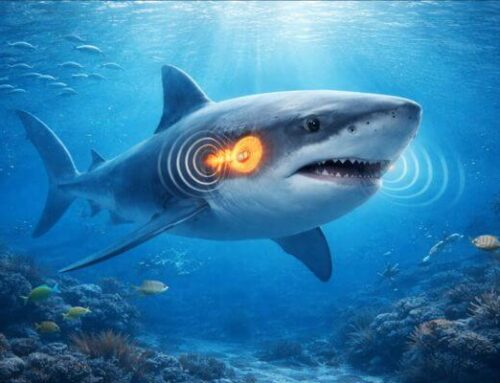
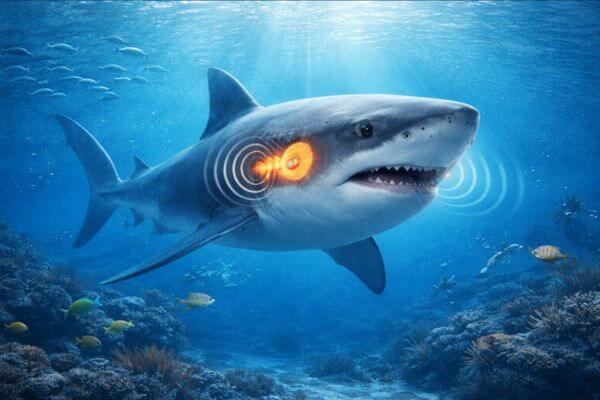
The Surprising Science Behind Shark Touch Sensitivity
When people think of sharks, they picture powerful ocean predators, fast, sleek, and built for survival. But here’s a fun question many students and shark lovers ask: Are sharks ticklish? This idea might sound silly at first, but shark biology reveals some fascinating truths about how these marine hunters experience touch.
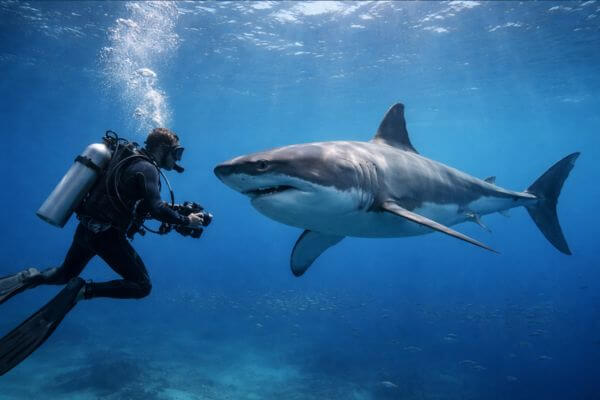
What Scientists Know About Shark Sensitivity
Sharks can absolutely sense touch far better than we can in many ways. But are they ticklish like humans? Not exactly. Instead, sharks experience tactile sensitivity, meaning they can feel pressure, vibration, and movement across their skin. In some cases, particular shark species react in ways that look a little like ticklish behaviour; they twist, arch, roll to the side, or slow down when gently touched.
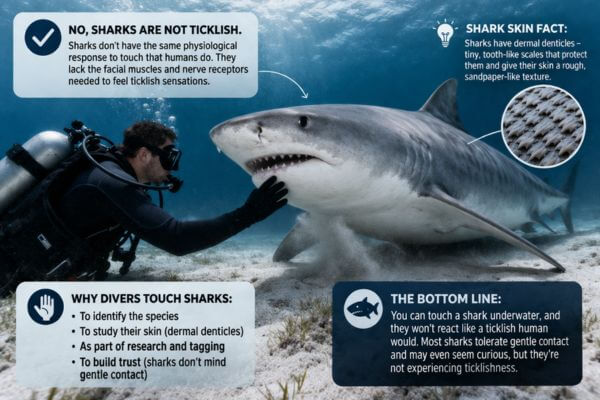
Are Sharks Ticklish When Divers Touch Them Underwater?
Divers sometimes report that sharks lean into a gentle rub or reevaluate for more.
This isn’t “ticklishness” as humans feel it, it’s a mix of:
- Tactile sensitivity
- Curiosity toward non-threatening contact
- Chemoreception and touch-based navigation
- Calming responses in some species
This kind of behaviour is especially evident in calmer species such as lemon sharks, nurse sharks, and sand tiger sharks.
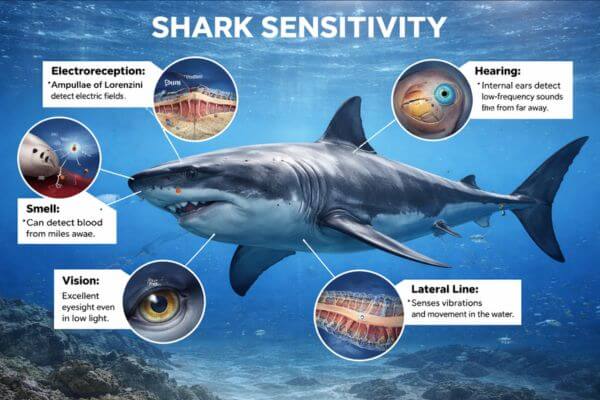
How Do Sharks Feel Touch? Understanding Shark Skin and Nerves
Shark skin is covered in dermal denticles, tiny tooth-like structures that:
- Reduce drag and boost swimming efficiency
- Protect the shark from parasites and injury
- Increase sensitivity by transmitting pressure vibrations
Under the skin lie nerve endings that alert the shark to:
- Water pressure changes
- Fast-moving prey
- Contact with objects or animals
- Electric fields in the water
This means sharks can feel far more than we see on the surface.
Do Sharks Enjoy Being Touched?
Some sharks appear relaxed when touched in specific areas, particularly around:
- The snout
- The sides of the body
- The “sweet spot” near the nose and mouth
Why? These areas contain sensory structures called ampullae of Lorenzini, which allow sharks to detect electrical signals. Light pressure may feel stimulating, calming, or enjoyable to them.
But this does not mean sharks want random contact. These moments occur only under controlled, respectful conditions and with experienced professionals.
What Happens When Sharks Enter “Tonic Immobility”?
One of the most misunderstood things is tonic immobility, a natural, trance-like stillness triggered by very specific handling.
Tonic immobility:
- Is not ticklishness
- Is not pleasure
- Is a neurological response linked to predator avoidance
- Happens mostly when sharks are gently inverted
Why Sharks React Differently to Touch Than Other Ocean Animals
Sharks are apex predators with an evolved sensory system that includes:
- Electroreception
- Mechanoreception (touch sensitivity)
- Lateral line vibration detection
- Pressure-based navigation
This makes their reactions very different from those of dolphins, seals, or fish.
Do All Shark Species Respond the Same to Touch?
Not at all! Different sharks show different behaviours:
Species are more likely to react calmly to touch
- Lemon sharks
- Sand tiger sharks
- Nurse sharks
- Whale sharks
- Some catsharks
Species that are more cautious or reactive
- Great white sharks
- Oceanic whitetip sharks
- Makos
- Tiger sharks (varies by individual)
Behaviour depends heavily on the shark’s personality, environment, and stress levels.
Why Being “Ticklish” Helps Sharks Survive
Touch sensitivity isn’t just a quirky trait; it’s a survival advantage.
Sharks use tactile information to:
- Detect prey vibrations
- Avoid obstacles in murky water
- Identify threats or competitors
- Navigate at night
- Explore new areas
- Communicate dominance or curiosity
For a top-tier ocean predator, touch is just as important as smell or sight.
Can Sharks Feel Pain?
Research suggests that sharks can feel pain, but their response differs from that of mammals. According to studies such as those summarised by the Florida Museum, sharks exhibit behavioural changes when injured or stimulated, indicating that pain perception exists even in ancient marine hunters.
Why The Idea Of Ticklish Sharks Fascinates Us
Humans love imagining apex predators having soft, funny traits; it makes them seem more relatable. But the truth is even better: sharks are scientific wonders, equipped with ancient, highly advanced sensory systems.
Their “ticklish” reactions aren’t laughter; they’re biological signals that tell us how incredibly tuned in these animals are to their underwater world. Understanding shark sensitivity helps us appreciate these marine hunters on a whole new level.
If you want to learn more about how sharks behave, hunt, and interact with their environment, explore more insights on our main page.