Shark Hearing Explained
When most people picture a shark, they imagine sharp teeth, powerful tails, and streamlined bodies built for hunting. But hidden beneath all that power is one of the shark’s most impressive tools: its hearing. So, do sharks actually have ears? The short answer is yes, just not the kind you can see.
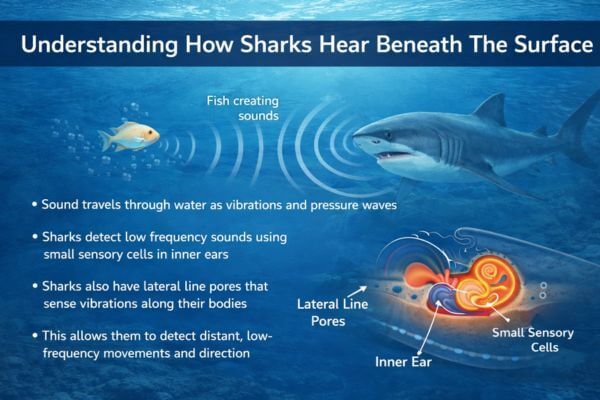
Understanding How Sharks Hear Beneath The Surface
Sharks do have ears, but they’re internal, no flappy outer ears like humans. Their hearing system is specially designed for life underwater, giving them a massive advantage as marine hunters.
Here’s how it works:
- Sharks have two small openings behind their eyes that lead to inner ear canals.
- Inside, they have structures similar to ours: semi-circular canals and hearing chambers.
- Sharks detect low-frequency vibrations, which travel incredibly well underwater.
- Their hearing is so sensitive that they can locate struggling prey kilometres away.
To a shark, sound is like a sonar map, quiet but incredibly detailed.
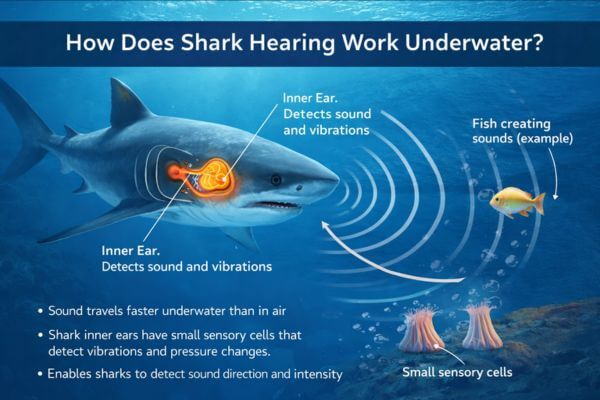
How Does Shark Hearing Work Underwater?
Sharks live in a world where sight is limited, and smell takes time. But sound?
Sound travels four times faster in water than in air, making it the perfect tool for survival.
Why Low-Frequency Sound Helps Sharks Find Prey
Sharks detect sounds between 10–1,000 Hz, especially the deep vibrations made by:
- Injured fish
- Swimming animals
- Boats
- Movement near the ocean floor
These vibrations tell an apex predator exactly where to investigate, even in murky or dark water.
What Part of the Shark Detects Vibrations?
Sharks rely on a special organ called the lateral line, a sensory strip running along their sides that detects pressure changes.
Together, the inner ears + lateral line allow sharks to “feel” sound as much as hear it.
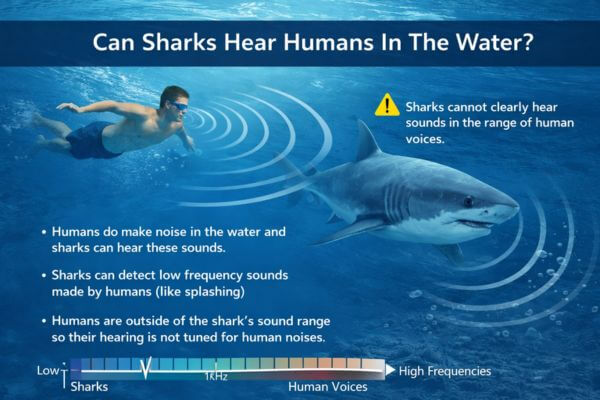
Can Sharks Hear Humans In The Water?
Yes, but probably not in the way you think.
Humans produce low-frequency vibrations when swimming, kicking, splashing, or using scuba gear.
Sharks detect:
- Rhythmic swimming
- Sudden splashes
- Unusual vibrations
- Heartbeat-level pulses only at a very close range
But to sharks, these sounds usually don’t resemble prey. In most cases, a shark will approach out of curiosity, not aggression.
Why Is Hearing Important For Sharks As Apex Predators?
Sharks use their hearing for almost every part of survival:
1. Locating Food
Faraway struggling fish send shockwaves through the water. A shark instantly picks up the direction.
2. Navigating the Deep Sea
In the dark or at depth, visual cues disappear. Sound becomes a compass.
3. Avoiding Danger
Even apex predators avoid threats, such as orcas or large groups of marine mammals.
4. Communicating Without Sound
Sharks cannot vocalise, but they can detect subtle movements and vibrations to sense the presence of other sharks nearby.
Do All Shark Species Hear The Same Way?
Different sharks rely more or less on hearing, depending on their environment.
Coastal Species
Bronze whalers, blacktips, and hammerheads hear well in shallow waters filled with chaotic noise.
Deep-Sea Species
Species like the goblin shark depend even more heavily on vibration detection because sunlight barely penetrates their world.
Great White Sharks
Great whites have some of the most advanced hearing among ocean predators, helping them patrol over long distances.
Can Sharks Hear High-Frequency Sounds?
Not really. Sharks specialise in low-frequency vibrations. High-pitched sounds, such as clicking dolphins or electronic beeps, usually don’t interest them.
This is one reason surfers often joke that they’re “paddleboard percussionists”: their splashing is low enough in frequency for sharks to detect.
What Sounds Attract Sharks?
Sharks are attracted to sounds that suggest struggling or injured prey, such as:
- Irregular splashing
- Thrashing movements
- Low-rhythmic pulses
- Disturbances on the ocean floor
Calm, smooth swimming is less noticeable to marine hunters.
What Sounds Repel Sharks? Myth vs. Science
Some surf products claim to deter sharks using sound. While research is ongoing, scientists note:
- Random noisy splashes do NOT repel sharks
- High-frequency devices have mixed results
- Sharks are inquisitive, so unusual noises may actually draw them closer
Always rely on proven safety guidelines, not myths.
Do Sharks Have Ears and How Do They Use Them To Survive In The Ocean?
Shark hearing is an incredible adaptation, helping these marine hunters navigate, feed, and survive in the vast underwater world. While invisible to us, their ears are potent tools that detect vibrations and guide sharks long before they ever see or smell something.
What Shark Hearing Reveals About The Ocean’s Apex Predators
Sharks may not have visible ears, but their internal hearing systems are among the most finely tuned sensory tools in the ocean. Their ability to detect low-frequency vibrations makes them efficient, curious, and highly aware predators. Discover the sea through fresh eyes and dive deeper into the world of South Africa’s most fascinating marine predators.